Every home has its own personality. Some are filled with busy families constantly running washing machines and dishwashers, while others belong to couples who enjoy quiet mornings with a freshly brewed cup of coffee. Although their routines might differ, both households depend on water that meets their everyday needs.
Unfortunately, unpleasant tastes, mineral deposits, and suspended particles can make ordinary activities more frustrating than necessary. Exploring customized filtration solutions for your home allows you to address specific water quality concerns without investing in equipment that offers little practical benefit.
For homeowners across the Treasure Valley, selecting the right treatment system begins with understanding their property, water supply, and daily habits. A personalized approach often makes considerably more sense than a one-size-fits-all installation.
Why Every Home Has Different Water Treatment Needs
Water quality isn’t identical from one property to another. Its characteristics depend on the original source, surrounding geology, treatment processes, and plumbing infrastructure.
Homes connected to municipal supplies may experience noticeable disinfectant-related tastes or odors. Properties relying on private wells might encounter excessive hardness, iron staining, or suspended sediment.
Even neighboring households can have different experiences with their water.
Perhaps your biggest frustration is the chalky residue that constantly appears around bathroom faucets. Meanwhile, someone living down the road might be more concerned about an unpleasant drinking water flavor.
These differences matter when choosing treatment equipment. Understanding the underlying problem makes it easier to select technology that offers meaningful improvements instead of simply masking the symptoms.
Understanding How Much Water Your Family Really Uses
Most people underestimate the amount of water they use throughout an ordinary day. A morning shower, several loads of laundry, cooking dinner, and washing dishes all contribute to daily consumption.
Evaluating household water usage is an important part of selecting appropriately sized filtration equipment that can accommodate your family’s requirements without unnecessarily restricting water flow.
Consider those particularly hectic mornings when several people need to get ready simultaneously. Your filtration system should have sufficient capacity to handle periods of increased demand.
Smaller households may need less treatment capacity, while larger properties often require equipment designed for higher flow rates.
Getting this balance right helps homeowners avoid unnecessary expenses and potential performance issues. Bigger equipment isn’t automatically better, especially when it exceeds your actual requirements.
Exploring Filtration Beyond the Kitchen Sink
A filter pitcher can be useful for improving certain drinking water characteristics, but its benefits don’t extend to the shower, washing machine, or other household fixtures.
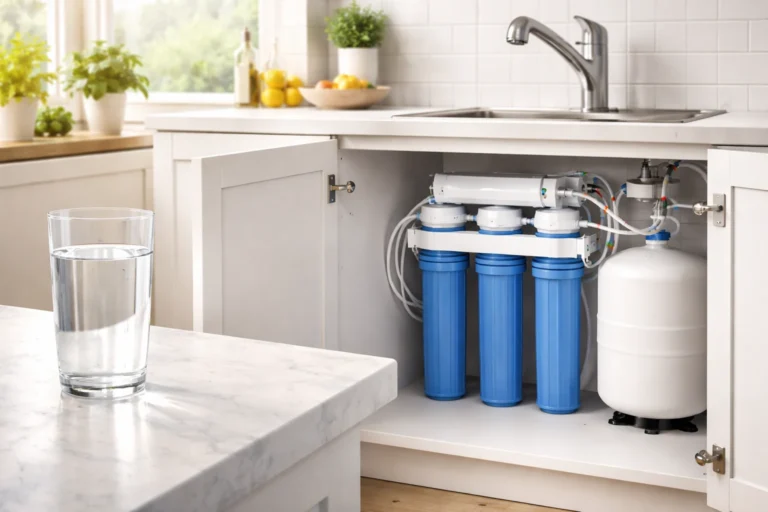
When comparing whole-home filtration options, homeowners should consider which water quality concerns affect multiple areas of their property and whether centralized treatment offers a practical advantage.
Sediment filters capture suspended particles such as sand and rust. Activated carbon can reduce certain unwanted tastes, odors, and contaminants.
Specialized equipment may be appropriate for addressing iron, manganese, or other identified concerns.
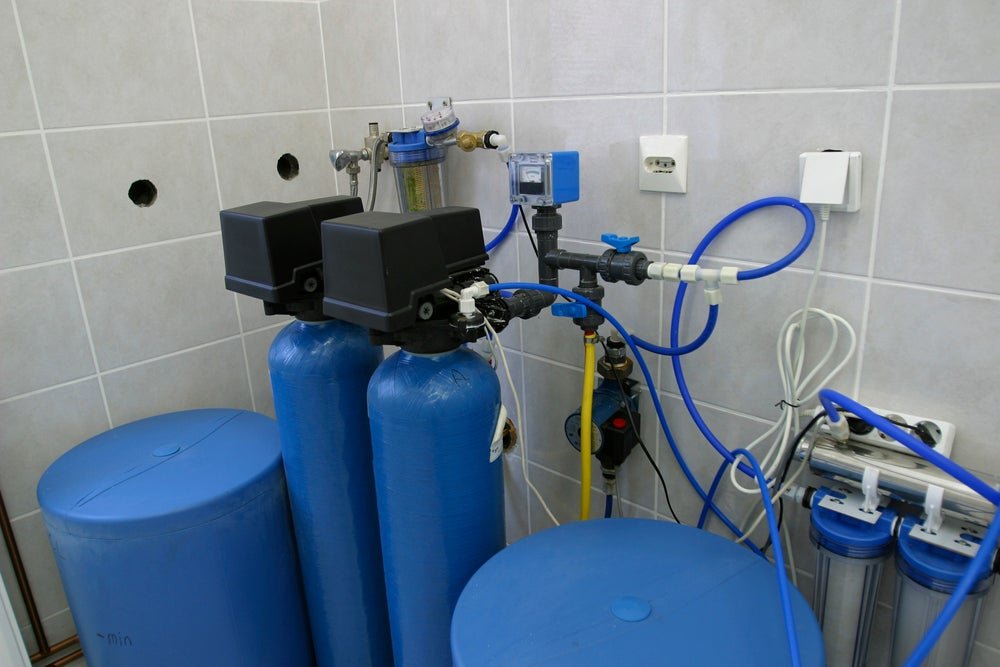
Centralized filtration typically treats water near the main supply connection before it travels through connected household plumbing.
It’s a convenient arrangement, particularly for families who would rather maintain one treatment system than manage several individual filtration devices.
Combining Filtration and Softening When Necessary
There’s a common misunderstanding that installing a water filter will automatically eliminate hard water. Unfortunately, conventional sediment and carbon filtration generally doesn’t remove dissolved hardness minerals.
Calcium and magnesium are responsible for those familiar chalky deposits that collect around faucets and inside certain appliances.
Traditional water softeners address these minerals through ion exchange, helping reduce new scale formation and improve soap performance.
Some Treasure Valley households benefit from combining filtration and softening because their water presents several different concerns.
Others might require only a single treatment technology.
The key is identifying what you actually need. Spending more money on additional equipment doesn’t necessarily guarantee better results.
Making Everyday Household Activities More Enjoyable
Good water quality can influence countless little experiences throughout the day.
Think about preparing your morning coffee, washing your favorite clothes, or taking a relaxing shower after spending an afternoon outdoors.
Appropriate filtration may help reduce objectionable tastes, odors, and visible particles. When suitable softening is included, homeowners may also spend less time dealing with hardness-related deposits.
These improvements aren’t always dramatic, and that’s perfectly fine.
Sometimes, the greatest benefit comes from no longer having to deal with an irritating problem that once seemed unavoidable.
Over time, those small conveniences can make a noticeable difference in how comfortable and manageable your home feels.
Considering Maintenance Before Making a Purchase
Filtration equipment requires occasional attention, regardless of how advanced or expensive it might be.
Cartridges accumulate debris, activated carbon eventually loses treatment capacity, and specialized components may require periodic servicing.
Before committing to a particular system, ask about replacement filter expenses, servicing requirements, and equipment accessibility.
Reliable laboratory testing should also guide your initial equipment selection. Periodic follow-up testing is particularly important when treatment addresses potentially harmful contaminants.
Remember that clearer water and improved taste alone don’t establish drinking water safety.
Choosing equipment with manageable maintenance requirements makes it easier to preserve treatment performance over the long term.
Better Water Should Fit Naturally Into Your Life
Improving household water quality doesn’t need to become an overwhelming project. Start by understanding your water supply, identifying your priorities, and considering how your family uses water throughout the day.
A carefully selected filtration system can address genuine concerns without introducing unnecessary complications or expenses.
Ultimately, your home should be somewhere you feel comfortable. Having dependable water for ordinary household activities is an important part of that experience.
Life in the Treasure Valley offers plenty of things worth enjoying. With the right treatment approach, worrying about your household water doesn’t have to take up more of your time than necessary.