Key Takeaways
- Wet soil, sewage-like odors, unusually green grass, slow drains, and gurgling fixtures can signal a septic system problem.
- One warning sign alone does not prove that a drain field has failed. A full tank, leaking pipe, local drain clog, or surface-water problem can create similar symptoms.
- Reduce water use, keep vehicles and people away from suspicious wet areas, and arrange an inspection rather than digging or attempting a repair yourself.
- Regular maintenance helps protect the tank, pipes, and drain field from unnecessary strain.
homeowners in Citra, Florida, a septic concern often starts with a small change in the yard or plumbing. A patch of wet ground, a new odor near the tank, or drains that suddenly seem sluggish can be easy to dismiss. Acting early matters because a professional inspection may identify a manageable maintenance or plumbing issue before it becomes a larger disruption.
When symptoms keep returning, local experience can make a difference. Drain field repair Citra, FL services from D & S Cleaning And Maintenance are centered on septic pumping, inspections, line repair, drain field work, and emergency response for homes and businesses. The Citra-based company has served local septic systems for more than two decades and works throughout Marion County and surrounding areas, giving property owners a relevant resource when wet soil, odors, or backups need a closer evaluation.
Why the Drain Field Deserves Attention
A septic system depends on more than the tank underground. After wastewater leaves the tank, the drain field disperses it through buried lines and surrounding soil, where treatment continues. A septic drain field is commonly made up of trenches, perforated pipes, porous material, and soil that work together to handle liquid wastewater.
Think of the drain field as a filter that needs room to accept water. Too much household water, accumulated solids, compacted soil, roots, or damaged components can reduce that capacity. In and around Citra, periods of heavy rain can also leave soil saturated, making it especially important to distinguish weather-related yard moisture from a recurring septic issue.
Five Warning Signs to Watch For
1. Soft or Wet Ground
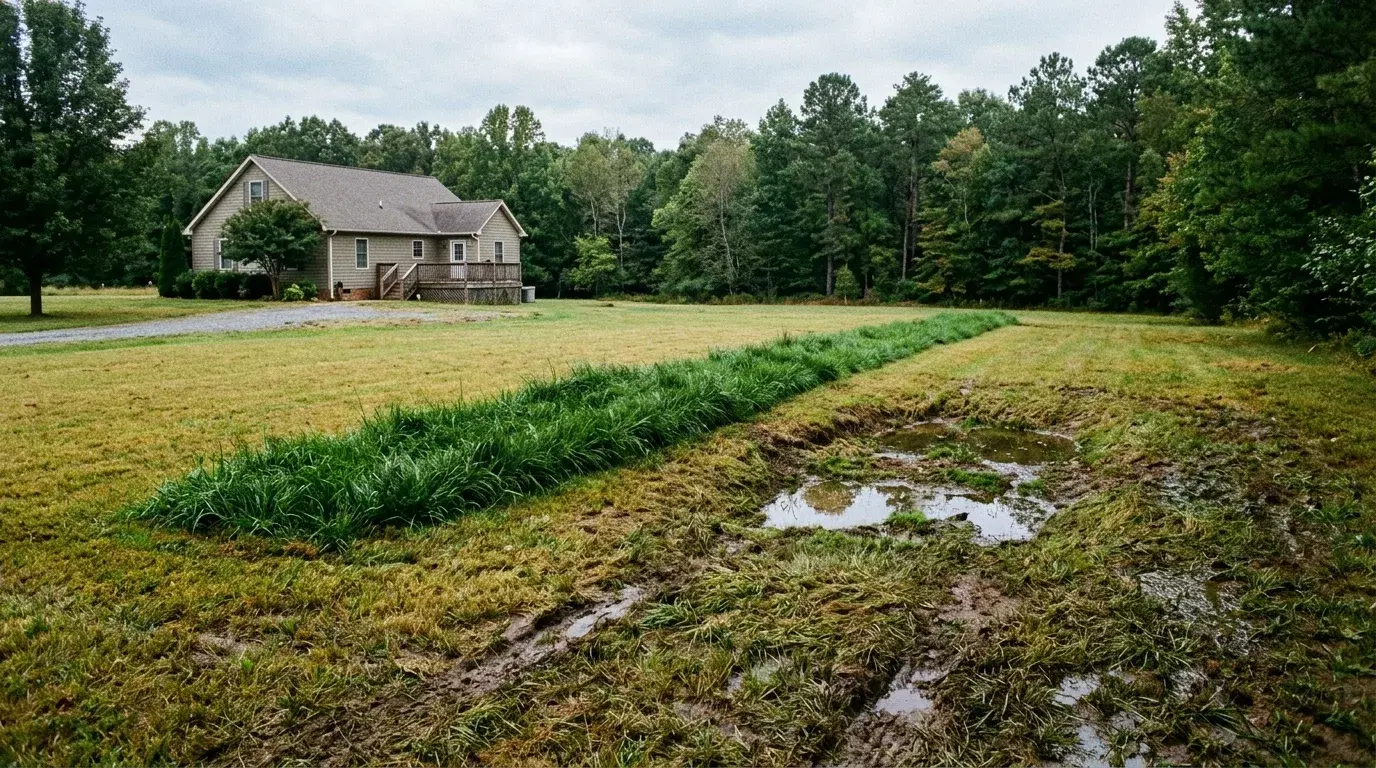
Standing water, muddy soil, or a spongy area near the drain field deserves attention, especially if it remains after several dry days. Compare that spot with nearby ground. Wet conditions may also come from poor grading, a broken irrigation line, roof runoff, or a leaking outdoor pipe, so the location and timing matter.
2. Bright Green Grass in One Area
A narrow strip or patch of grass that looks greener and grows faster than the rest of the lawn can indicate extra moisture or nutrients below the surface. Grass color alone is not a diagnosis. It becomes more concerning when the area is soft, smells unpleasant, or appears alongside slow drains inside the home.

3. Sewage or Musty Odors
Persistent sewage-like odors around the tank, drain field, or plumbing fixtures may point to surfacing wastewater, a loose tank cover, a damaged line, or a venting issue. Keep children and pets away from any area with visible wastewater or strong odors. Never enter a septic tank or attempt to remove a damaged cover.
4. Slow Drains and Gurgling Pipes
One slow sink can be a local clog. Several slow sinks, tubs, showers, or toilets at the same time suggest a broader plumbing or septic concern. Gurgling from drains or toilets can also mean air and wastewater are not moving normally through the system.
5. Backups Inside the Home
Wastewater backing up into a toilet, tub, shower, sink, or floor drain is an urgent warning. Stop unnecessary water use immediately, avoid direct contact with wastewater, and arrange professional service. More water sent down drains can worsen an active backup.
Common Causes Behind Drain Field Problems
- Too much water: Long showers, repeated laundry loads, leaking fixtures, and running toilets can overload the system.
- Missed pumping: Excess solids in the tank can move toward the outlet and restrict drain field performance.
- Compacted soil: Cars, trailers, and heavy equipment can damage buried lines and reduce the soil’s ability to absorb wastewater.
- Roots and landscaping: Trees and shrubs planted too close to septic components can interfere with pipes over time.
- Surface water: Downspouts, sump discharge, irrigation, and poor yard drainage can send unwanted water toward the drain field.
- Damaged components: A clogged filter, broken pipe, distribution issue, or pump problem may look like drain field failure.
What to Do When Trouble Appears
- Reduce showers, laundry, dishwashing, and other high-water activities until the cause is checked.
- Keep vehicles, sheds, trailers, and heavy equipment away from the tank and drain field area.
- Keep people and pets away from standing water or wastewater on the property.
- Look for obvious extra-water sources, including leaking toilets, irrigation leaks, or downspouts aimed toward the field.
- Write down the location of symptoms, recent weather, odors, and any indoor plumbing changes.
- Schedule an inspection before excavating, adding chemicals, or assuming the entire field needs replacement.
Repair or Replacement: Why Testing Comes First
A wet area does not automatically mean a full drain field replacement is necessary. A qualified septic professional may inspect the tank, inlet and outlet pipes, outlet filter, distribution box, pump equipment, and drain lines before recommending work. Depending on the cause, pumping, filter service, pipe repair, drainage corrections, or better water-use habits may resolve the concern.
Replacement becomes a more serious consideration only after the system’s condition, soil behavior, age, and applicable local requirements are reviewed. This step-by-step approach helps homeowners avoid making decisions based on a single symptom.
Simple Habits That Protect a Citra Drain Field
The U.S. Environmental Protection Agency advises homeowners to inspect septic systems regularly, use water efficiently, dispose of waste properly, and protect the drain field from vehicles and excess runoff. Its guidance on caring for a septic system also notes that many household tanks are typically pumped every three to five years, although the right schedule depends on tank size, household size, wastewater volume, and solids levels.
- Spread laundry and dishwasher use across the week rather than concentrating it into one day.
- Repair leaking toilets and faucets promptly.
- Flush only human waste and toilet paper.
- Keep grease, oils, wipes, paint, solvents, and harsh chemicals out of drains.
- Use grass or suitable ground cover over the field instead of trees and shrubs with extensive roots.
- Direct roof runoff, pool discharge, and other excess water away from septic components.
- Keep records of pumping, inspections, repairs, and unusual symptoms.
Common Questions From Homeowners
Can heavy rain make a drain field look like it is failing?
Yes. Saturated ground and poor surface drainage can create temporary wet spots. Concern increases when the area stays wet after dry weather or appears with odors, slow drains, or indoor backups.
Does green grass always mean there is a septic problem?
No. Grass can grow differently for many reasons. It is more meaningful when unusually green growth occurs directly over the drain field along with wet soil or plumbing symptoms.
What is the safest first step after a sewage backup?
Stop unnecessary water use, avoid contact with wastewater, keep pets and children away, and seek a professional inspection. Early action can limit additional wastewater from entering the home or yard.
Conclusion
Drain field problems are easier to address when early signs are not ignored. Wet ground, unusual grass growth, odors, gurgling pipes, and repeated backups all warrant attention, but none independently proves that a replacement is needed. Careful observation, lower water use, consistent maintenance, and a proper local inspection can help Citra homeowners identify the real cause and choose a practical next step.