The First Sign Usually Shows Up in a Glass
There’s a strange little moment that happens when you fill a glass from the kitchen tap and pause. The water isn’t exactly dirty, maybe not even smelly, but it doesn’t look right either. It has a foggy look, or tiny particles floating around, or a cloudy swirl that takes longer than expected to clear. You hold it up to the light, tilt the glass a bit, and suddenly the most ordinary thing in the house feels questionable.
Most people want water to be simple. Clear means clean, cloudy means bad — that’s how we’d like it to work. But household water is more complicated than that. Sometimes cloudiness is harmless air bubbles. Other times, it can point to minerals, pressure changes, plumbing issues, or actual particles moving through the system.
The tricky part is knowing when to shrug it off and when to pay attention.
Why Water Turns Cloudy
Cloudiness can happen for several reasons. If the water looks milky but clears from the bottom up after sitting for a minute, it may just be air trapped in the line. This can happen after plumbing work, changes in pressure, or even seasonal shifts in the water supply. Annoying, yes. Dangerous, usually not.
But if the water stays cloudy, leaves residue, or has visible bits floating in it, that deserves a closer look. Sediment in water may come from old pipes, nearby construction, a disturbed water main, a well system, or mineral deposits breaking loose inside plumbing. It may look like tiny specks, flakes, grit, or a fine haze that never fully settles.
A little sediment might not seem dramatic, but over time it can clog screens, damage appliances, wear down valves, and make drinking water feel less trustworthy. Nobody wants to wonder whether the crunch in their ice cube came from the freezer or the water supply.
The Everyday Irritation of Gritty Water
Water with particles in it affects more than a glass on the counter. It can show up in showerheads, washing machines, dishwashers, faucet aerators, toilet tanks, and water heaters. You may notice low pressure at one tap, a sputtering faucet, or a showerhead that seems to clog every few weeks.
Sometimes the signs are small enough to ignore. A bit of grit in the sink. A ring inside the toilet tank. Little brown flecks in the bathtub after filling it. But small signs can add up, especially if the source of the problem is ongoing.
This is where homeowners often start cleaning more instead of investigating more. They scrub the stains, rinse the screens, replace the showerhead, and keep going. Fair enough — life is busy. But if the issue keeps returning, the water is probably bringing the problem back with it.
Cloudy Does Not Always Mean Unsafe
Let’s be fair: cloudy water is not automatically unsafe. That’s important to say because water concerns can quickly turn into worry, especially when children, elderly family members, or pets are in the home. Sometimes cloudy water is caused by dissolved air, calcium, or harmless minerals.
Still, appearance matters because it is a signal. If cloudiness comes with a strange smell, metallic taste, staining, slimy buildup, stomach discomfort, or visible particles, it should not be ignored. Water can look mostly normal and still carry unwanted substances, while water that looks cloudy may sometimes be less serious than it appears.
The best approach is not panic. It’s testing. A water test can show whether the issue is hardness, iron, manganese, sediment, bacteria, pH imbalance, or something else. Once the cause is known, the solution becomes much clearer.
Well Water Needs Extra Attention
Homes with private wells often deal with sediment more than homes on municipal water. Wells draw from groundwater, and groundwater naturally moves through soil, rock, minerals, and sometimes organic material. Heavy rain, drought, flooding, well pump issues, or a damaged well casing can all change what ends up in the water.
If a well suddenly starts producing gritty or cloudy water, it may be caused by pump placement, a failing screen, shifting soil, or surface water getting into the system. That doesn’t mean the well is ruined, but it does mean the water should be checked.
A good sediment filter can help, but the filter should match the problem. Fine silt needs different filtration than larger particles. Iron bacteria, clay, and sand all behave differently. Guessing with a random filter from a shelf might help a little, or it might clog quickly and frustrate everyone in the house.
City Water Can Have Sediment Too
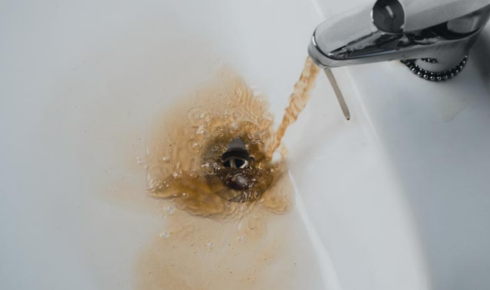
Municipal water is treated and monitored, but it can still carry particles by the time it reaches your tap. Water main repairs, hydrant flushing, pipe corrosion, old service lines, or sudden pressure changes can disturb material inside the pipes. That’s why people sometimes notice discoloured or gritty water after roadwork or utility maintenance nearby.
If the issue only lasts a short time, flushing the cold taps may help. But if particles keep appearing, especially in multiple fixtures, it is worth checking faucet aerators, the water heater, and the main supply. Sometimes the problem is not the city line at all. It may be inside the home’s plumbing.
What About Dirt and Sand?
Visible dirt and sand in tap water usually points to a physical source rather than a taste or odour issue. In wells, it may mean the pump is pulling from too low in the well or the well screen is allowing material through. In city-water homes, it can come from disturbed mains, ageing pipes, or sediment settled inside the water heater.
This kind of problem can be hard on appliances. Washing machines, dishwashers, tankless heaters, and refrigerator water lines are not designed to handle grit forever. Even small particles can scratch surfaces, block valves, and shorten the life of equipment. It’s one of those problems that seems minor until something stops working.
A Practical Way to Handle It
Start by noticing patterns. Does the water look cloudy at every tap or only one? Is it worse with hot water or cold water? Does it clear after sitting? Are there particles at the bottom of the glass? Did it begin after plumbing repairs, storms, or construction nearby?
Next, clean faucet aerators and check whether sediment is collecting there. If hot water is the main issue, the water heater may need attention. If the whole house is affected, a professional water test and inspection can save a lot of guessing.
The right fix might be a sediment filter, cartridge replacement, water heater flush, well inspection, plumbing repair, or a more complete treatment system. It depends on the cause.
Clearer Water, Calmer Living
Water doesn’t have to be perfect in a fancy way. It just needs to feel dependable. When it looks clean, tastes normal, and runs without grit or cloudiness, daily life feels easier. You stop inspecting every glass. You stop wondering about the shower. You stop replacing small parts over and over.
A cloudy glass of water may be harmless, or it may be the first clue that something needs care. Either way, it’s worth listening to. Your water is part of your home’s foundation, quietly working in the background every single day. Giving it a little attention now can prevent bigger, messier problems later.