Water is one of those things we rarely question until it starts acting differently. Maybe there’s a chalky film around the faucet, the shower glass never seems completely clean, or the water has a noticeable swimming-pool smell. Sometimes the change is subtle. Other times, it’s impossible to ignore.
These signs don’t automatically mean something is seriously wrong. Water naturally contains minerals and other substances, and different supplies have different characteristics. Still, unusual changes are worth investigating rather than simply working around them.
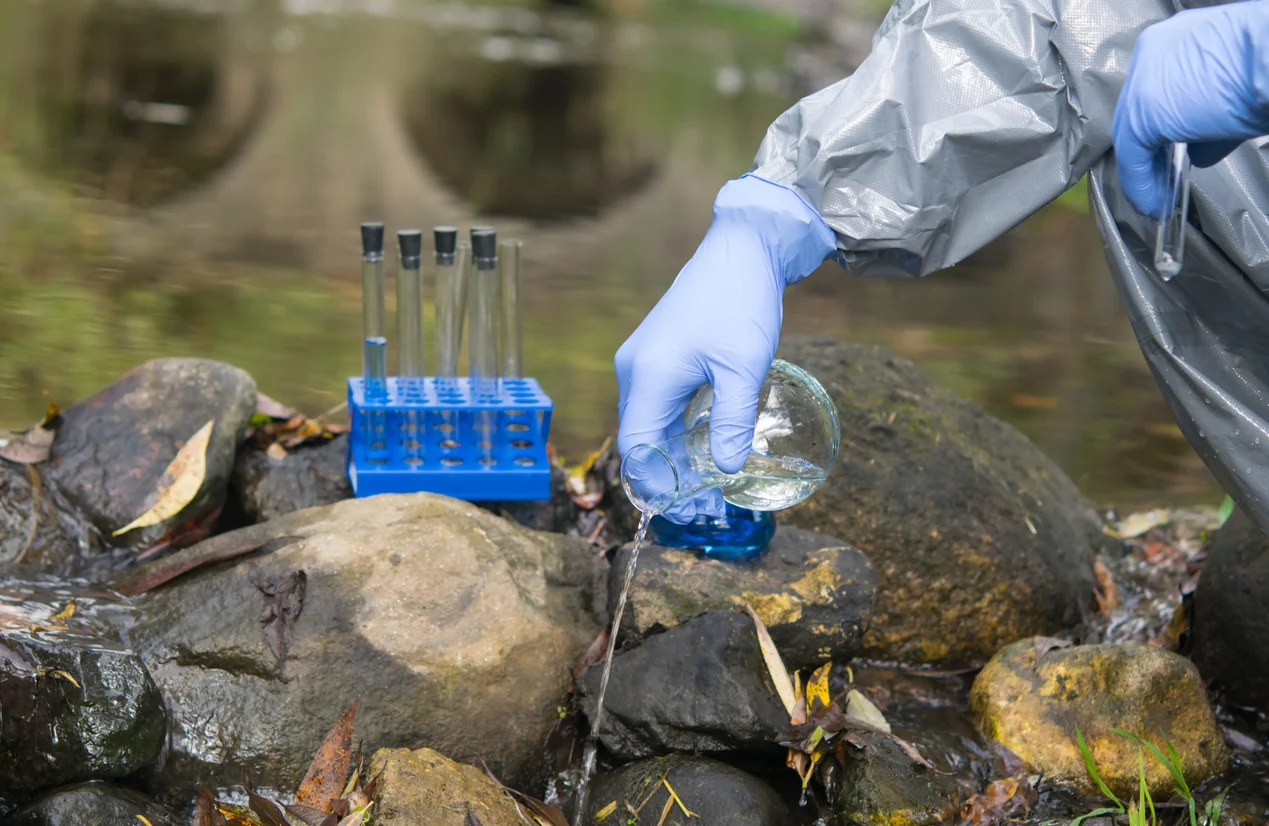
That’s where targeted water testing becomes useful. Instead of guessing which filter to buy, homeowners can learn what is actually present and make treatment decisions based on evidence.
Why Water Testing Should Come Before Treatment
It’s tempting to buy a filtration system as soon as a water problem appears. But that’s a bit like buying medicine before knowing what’s wrong.
Different water conditions require different treatment methods. Hard water may call for softening, while sediment might require mechanical filtration. Chlorine and certain odors can often be addressed with activated carbon, whereas some naturally occurring contaminants need specialized treatment.
Testing gives you a starting point.
For private well owners, testing can be particularly important because groundwater chemistry varies from one property to another. Even neighboring homes may have noticeably different results depending on their wells and surrounding geology.
A good test doesn’t just tell you whether water is “good” or “bad.” It provides numbers that help explain what’s happening.
Understanding Hardness in Household Water
One of the most common concerns homeowners encounter is mineral hardness. Calcium and magnesium are primarily responsible for hard water, and while these minerals aren’t necessarily a health concern at typical levels, they can certainly make household chores more frustrating.
White deposits around faucets, spots on dishes, soap scum, and scale inside appliances are familiar signs.
Hardness testing measures the concentration of these minerals and helps determine whether a water softener may be appropriate. The results can also help with selecting equipment size and understanding how frequently the system may need attention.
It’s worth remembering that a standard filter isn’t necessarily designed to remove hardness. A homeowner may spend money on a high-end filtration system and still have the same scale problem afterward.
Knowing the water chemistry first avoids that headache.
What Chlorine Testing Can Tell You
Municipal water systems commonly use chlorine or related disinfectants to control harmful microorganisms. This treatment is an important part of maintaining safe public water supplies, but some homeowners notice the smell or taste.
If your tap water reminds you of a swimming pool, chlorine may be one reason.
Chlorine testing can measure the amount present and provide useful information when choosing filtration. Activated carbon filters, for example, are commonly used to reduce chlorine and improve taste and odor.
However, chlorine isn’t automatically a problem simply because you can smell it. The significance of a result depends on the concentration, the type of disinfectant used, and the applicable water-quality standards.
Testing gives context to what you’re noticing.
Why Arsenic Testing Deserves Special Attention
Some water-quality concerns are easier to notice than others. Arsenic isn’t one of them.
Arsenic can occur naturally in groundwater as a result of local geological conditions. It may also be associated with certain historical industrial or agricultural activities. Most importantly, it doesn’t necessarily change the taste, smell, or appearance of water.
That makes arsenic testing especially important when local geology or water-quality information suggests a potential concern.
Private well owners in areas where arsenic is known to occur may want to discuss appropriate testing with a qualified laboratory or water professional. If elevated levels are found, treatment should be selected specifically for arsenic rather than relying on a generic household filter.
This is a good example of why clear-looking water shouldn’t automatically be considered problem-free.
Testing Beyond the Basics
Hardness, chlorine, and arsenic are only three examples of what can be evaluated.
Depending on the water source and local conditions, testing may also include pH, iron, manganese, nitrates, turbidity, total dissolved solids, bacteria, and other parameters.
Not every household needs an enormous laboratory panel. The appropriate tests depend on the source of the water, previous results, environmental conditions, and any symptoms you’ve noticed.
For instance, a private well near agricultural land may warrant different testing from a municipal supply in an urban neighborhood.
The goal is targeted information, not collecting numbers just for the sake of it.
Private Wells Require More Attention
A private well can be an excellent water source, but the homeowner takes on the responsibility of monitoring it.
Testing may be appropriate periodically and after events that could affect the water, such as flooding, heavy rainfall, well repairs, or changes in nearby land use.
Keeping old test results is also a smart habit. A single result tells you what the water looked like at one point in time. Several results over the years can reveal trends.
If something suddenly changes, you’ll have a baseline for comparison.
That’s useful information—and it can save time when discussing the issue with a professional.
How Testing Helps You Choose Treatment
Water treatment works best when it’s matched to a specific problem.
A softener can address hardness. Activated carbon may reduce chlorine and improve taste. Specialized media can target certain metals. Reverse osmosis can provide additional treatment for many dissolved substances at the point of use.
There may be situations where several technologies are combined.
For example, a home might use whole-house filtration for sediment and chlorine while using reverse osmosis for drinking and cooking water.
The right combination depends on the test results.
Instead of asking which system is “best,” ask which system is best for your water. It’s a much more useful question.
Don’t Ignore Changes in Taste or Appearance
Water doesn’t always announce a problem dramatically.
A slight metallic taste, new staining, cloudy water, or an unfamiliar odor may simply indicate a change in mineral content or plumbing conditions. But sudden changes are still worth investigating.
If you’ve recently moved into a home with a private well, testing can also provide peace of mind. You don’t have to wait until there’s a noticeable problem.
And if your water comes from a municipal system, local water-quality reports can provide useful background information before you decide whether additional household testing is necessary.
Maintenance Matters After Testing
Testing tells you what’s happening, but treatment equipment still needs maintenance.
Filters become saturated. Water softeners need servicing. Carbon media eventually lose effectiveness. Reverse osmosis membranes require replacement. Even a well-designed system won’t perform indefinitely without care.
Keep track of service dates and replacement schedules. It may feel like another item on the household to-do list, but it’s much easier than discovering months later that the equipment hasn’t been maintained properly.
A Clearer Picture Leads to Better Water Decisions
Water testing doesn’t have to be complicated. The basic idea is quite simple: find out what’s in your water before deciding what to do about it.
Hardness testing can explain persistent scale. Chlorine testing can help investigate taste and odor. Arsenic testing can identify a contaminant that isn’t visible or detectable by taste.
From there, treatment can be selected based on actual conditions rather than guesswork.
Good water management isn’t about buying the most expensive filter or installing every technology available. It’s about understanding your supply, paying attention to changes, and choosing solutions that make sense for your home.
A little testing can provide a lot of clarity—and when it comes to something you use every day, that’s a pretty worthwhile investment.