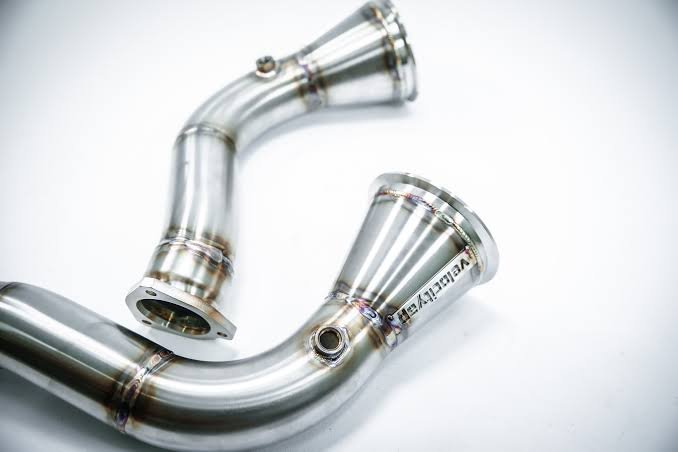
Modern performance vehicles are designed to deliver an exciting combination of power, refinement, and advanced engineering. For enthusiasts looking to personalize their cars, the exhaust system is one of the most common areas for upgrades. Downpipes are positioned close to the turbochargers and can influence exhaust flow, sound, and the overall character of a vehicle. Choosing components specifically engineered for the vehicle is essential for achieving a reliable installation.
Understanding Performance Downpipes
A downpipe connects the turbocharger outlet with the rest of the exhaust system. Since exhaust gases are extremely hot and move through this section at high speed, construction quality and accurate fitment are important. Factory downpipes are generally designed around emissions regulations, noise limits, durability, and everyday driving.
Aftermarket alternatives can be manufactured with different pipe diameters, bends, materials, and catalytic-converter configurations. Enthusiasts should consider their vehicle’s intended use and local regulations before selecting a replacement system.
Lamborghini Urus Exhaust Upgrades
The Lamborghini Urus combines SUV practicality with the performance expected from a Lamborghini. Its twin-turbocharged powertrain gives it strong acceleration, while its sophisticated chassis and electronic systems are designed to deliver a controlled driving experience.
For owners exploring lamborghini urus downpipes, fitment should be one of the first considerations. A suitable product should be engineered around the Urus platform and provide correctly positioned mounting points and sensor provisions. High-quality materials and precise welding can also be important when dealing with the temperatures generated by a high-performance turbocharged engine.
A downpipe upgrade is often considered alongside other exhaust or engine modifications. However, changes to emissions equipment may affect vehicle compliance and should be evaluated before installation.
Mercedes G63 AMG W463A Downpipes
The Mercedes-AMG G63 W463A is recognized for its distinctive design and powerful performance. Although it retains the iconic G-Class appearance, its modern turbocharged engine provides considerable performance potential.
For enthusiasts considering mercedes g63 amg w463a catted and catless downpipes, understanding the difference between these configurations is important. Catted downpipes retain catalytic converters, while catless designs remove this emissions-control component. Their sound, exhaust characteristics, emissions behavior, and legal suitability can therefore differ significantly.
Before choosing a system, owners should confirm the exact model year, engine specification, and intended use. Some modifications may be suitable only for closed-course or off-road applications depending on local regulations.
Catted vs. Catless Options
Catted downpipes may provide a compromise between improved exhaust flow and retaining emissions-control equipment. Catless systems generally offer a less restricted exhaust path but can increase emissions and may cause compliance issues.
Changes to catalytic converters can also affect oxygen sensors and engine management. Depending on the vehicle and modification, software calibration may be required to prevent warning lights or compatibility issues. Professional advice is recommended before making major changes.
Audi RS4 and RS5 Downpipes
The Audi RS4 and RS5 are performance-focused models that have attracted a large aftermarket following. Their turbocharged engines can respond well to carefully planned exhaust modifications, making downpipes a popular component among enthusiasts.
audi rs4 rs5 downpipes are available in different designs, so buyers should check pipe diameter, material, flange construction, sensor locations, and catalytic-converter specifications. Exact compatibility can vary depending on model year and regional configuration.
Installation and Fitment
Professional installation is recommended when replacing downpipes on high-performance vehicles. Correct positioning is important because the components operate close to the engine and turbochargers. Improper installation can result in exhaust leaks, excessive vibration, heat-related problems, or sensor issues.
Before purchasing, verify the vehicle’s chassis code, engine, model year, and existing exhaust configuration. Manufacturer fitment information should always take priority over general compatibility assumptions.
Legal and Emissions Considerations
Downpipe modifications can affect emissions, exhaust noise, and vehicle inspection requirements. Regulations differ between countries and regions. Removing or altering catalytic converters may make a vehicle unsuitable for public-road use in certain locations.
Owners should therefore check local requirements before purchasing or installing modified exhaust components. Understanding these rules can help avoid unexpected inspection or registration problems.
Final Thoughts
Performance downpipes can be an important component of an enthusiast’s exhaust upgrade plan. Whether working with a Lamborghini Urus, Mercedes-AMG G63 W463A, or Audi RS4 and RS5, buyers should prioritize precise fitment, durable construction, appropriate configuration, and legal compliance. A carefully selected system, combined with professional installation, can help create a more personalized exhaust setup while respecting the engineering of these high-performance vehicles.