My friend Shruthi moved from Rajajinagar to Kudlu Gate on a Friday evening in November, which she now calls “a decision made by someone with no memory of Friday evenings.” The truck left at five and reached at a quarter to eleven. Around Silk Board the traffic stopped being traffic and became a kind of weather. Near HSR a downpour arrived with all the subtlety of a bucket, and she spent half an hour in the cab with her late father’s harmonium on her lap, wrapped in a bath towel, while the driver played old Kannada songs to keep everyone calm. She calls the harmonium Gopal. He arrived in perfect tune. Shruthi arrived with a headache and a strange fondness for that driver’s playlist.
That’s Bangalore for you. The weather is lovely right up until it isn’t, the roads follow schedules known only to themselves, and every apartment complex has a rulebook that sounds like it was drafted in a bad mood. I’ve moved twice here and helped on several more, so here’s what I’d say over a filter coffee at a standing counter, a scooter honking somewhere near your elbow.
Skies, signals and the rules at the gate
People tend to fix a date and only later learn that the weather and the society both have opinions. Evening showers can pop up almost any month from March to November, so try to finish loading by early afternoon. Ask how the crew protects furniture if the clouds open. A thin plastic sheet won’t save a sofa, and I’ve watched it fail in real time.
Then there’s the traffic. Silk Board, Hebbal, Marathahalli, Electronic City, the ORR near Bellandur: any of them can swallow an hour without a flicker of remorse. Start at seven or eight if you can. And call your apartment association before you lock anything in, because plenty of complexes limit goods-lift hours, collect a deposit, want written notice a few days ahead, or refuse Sunday move-ins altogether. Ask about lift size while you’re at it. It decides whether your wardrobe goes up whole or in pieces.
If you can manage it, skip the last few days of the month. Half the city seems to be changing flats then.
Choosing who carries your life
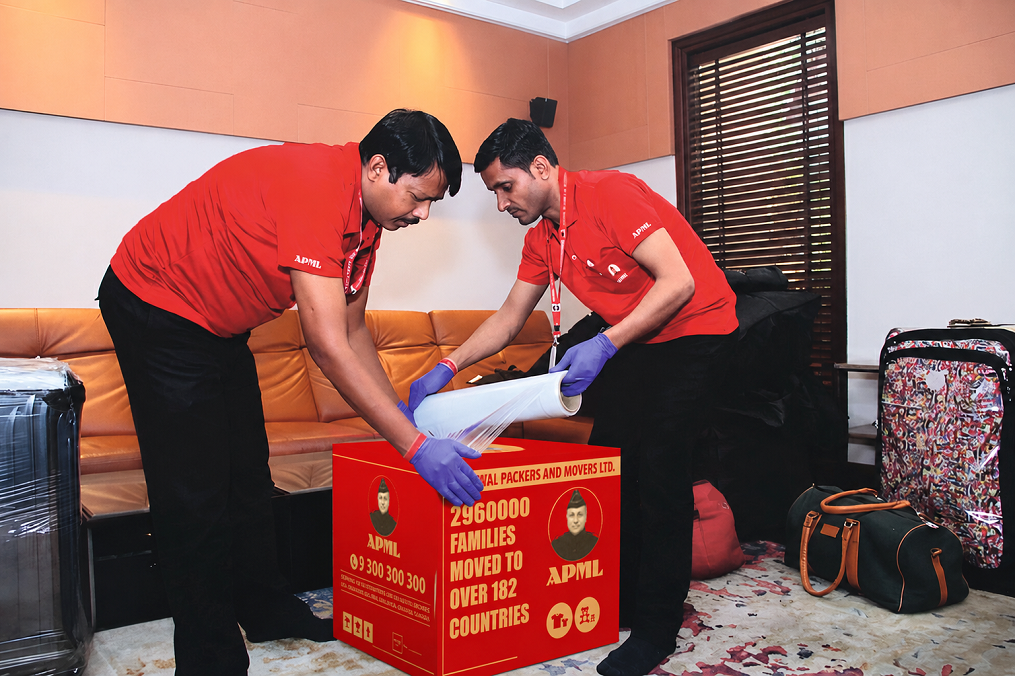
Search for Movers and Packers Bangalore and you’ll land on a flood of near-identical websites, all promising “zero damage” and “lowest rates” in cheerful fonts. Those lines cost nothing to write, and none of them can be checked from a landing page. What matters is who actually turns up at your door and how they treat your things.
So slow down a little. Ask for a survey, in person if possible, or a long video call where you walk through every room. Open the cupboards. Show the loft, the balcony storage, the fridge, the staircase. A quote given without seeing any of that is basically a guess, and guesses tend to grow on moving day.
Get at least three quotes and compare what’s inside them, not only the total. Is packing material included? Loading and unloading? Dismantling and reassembly? Extra charges where there’s no lift? Transit insurance? The cheapest number often looks wonderful until the “additional charges” start arriving one by one.
Keep everything in writing. WhatsApp counts. Screenshots count. A promise made over a noisy call has usually evaporated by evening.
Reviews, local know-how and a raised eyebrow
I read reviews the way I read restaurant ratings, with skepticism. “Nice service!” tells me nothing. “Crew came forty minutes late, packed carefully, bill matched the quote” sounds like a real person on a real day, which is exactly why I believe it.
Local knowledge matters more than people expect. A decent Packers and Movers Bangalore team should know that certain lanes in Indiranagar or HSR can’t take a big truck, that some gated communities off Sarjapur Road want vehicle details in advance, and that Whitefield at six in the evening is practically another country. Ask directly. If they stumble over basic questions about your neighborhood, that tells you something. And if a friend or colleague can vouch for a crew from their own move, that beats any website. Even then, verify. Call, ask questions, and watch how they react when you push a little.
What to hand over, what to keep
Let the professionals handle the heavy, fragile and awkward things. TVs, mirrors, glass tables, crockery, the wardrobe you assembled with an Allen key and some choice language. They’ve got the foam sheets, corrugated boards and corner guards, and they’re far faster than you’ll ever be.
But keep the irreplaceable stuff close. Documents, laptops, chargers, medicines, jewelry, a bit of cash, school files. Put it all in a bag that rides in your car, not on the truck. A colleague of mine once spent an hour tearing open cartons for his rental agreement, which had been sealed inside a box marked “misc kitchen.” He still winces about it.
Photograph your furniture and electronics before anything gets wrapped. Five minutes, tops. If something arrives scratched, you’ll have proof instead of an argument on the pavement.
Carry less, pay less
Here’s what people realize a little late: you’re paying for volume, one way or another. Before the survey, walk through your place with a colder heart than usual. Clothes you haven’t worn since 2020, tangled cables for devices that no longer exist, a chair with one suspicious leg. Sell it, donate it, or let it go.
Oddly, it feels good. You walk into the new place with less baggage, and not only the cardboard kind.
The day itself, and the hush after
Be there. I know it’s tempting to leave everything to the crew and disappear for a coffee, but somebody has to say which box belongs in which room, check the inventory list and answer the dozen small questions that always pop up. Keep water and a few snacks around. Tip fairly if they’ve earned it. Then do one last lap of the old flat: cupboards, balcony corners, the loft, behind every door. Somebody always forgets something. I once left a full set of steel containers behind. I never found out where they ended up.
When the truck pulls away and the new place fills up with unfamiliar cartons, there’s often a strange hush. Tired, relieved, a bit sad, all at once. That’s normal. Don’t try to unpack tonight. Make the bed, find the kettle, order something warm, and leave the rest for morning.
Moving is never perfectly smooth, and I won’t pretend otherwise. Something will run late, something will land in the wrong room, and a neighbor will definitely grumble about the lift. But with some planning, honest questions and people who actually listen, it becomes something you get through rather than something that gets through you.
Shruthi, by the way, still has Gopal. He sits in her living room now, and she plays him on Sunday evenings. The neighbors, to her surprise, have started asking for requests.