
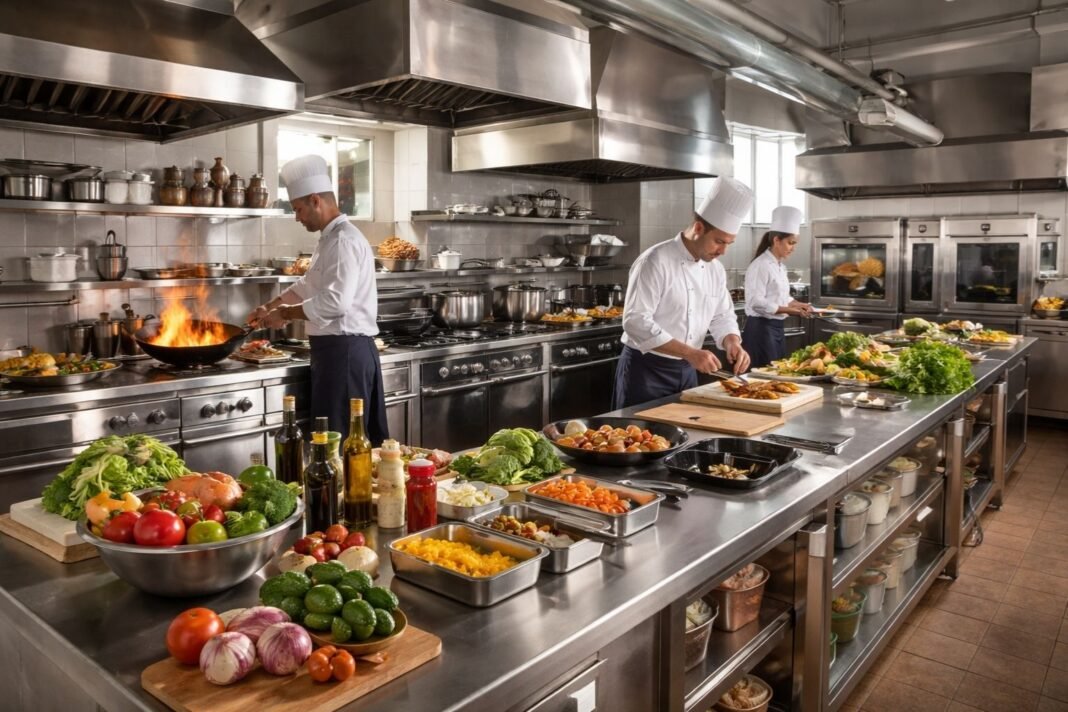

Walk down any busy street in India and you’ll see it — restaurants buzzing, waiters rushing, families chatting over meals. It’s lively, familiar, almost comforting. But somewhere behind the scenes, in quieter lanes and industrial spaces, another kind of food business is growing. No dining tables. No fancy interiors. Just kitchens, screens, and delivery riders coming and going.
Cloud kitchens.
At first, they felt like a pandemic workaround. Now? They’re a serious business model. And naturally, one big question keeps popping up — which one actually makes more money?
The Traditional Restaurant Charm (and Cost)
Let’s start with what we know.
Traditional restaurants are more than just food. They’re experiences. Ambience, service, location — all of it matters. People don’t just pay for a meal; they pay for how it feels.
But that experience comes at a cost.
Rent in prime locations is expensive. Interiors? Even more. Add staff salaries, utilities, licenses, maintenance — suddenly your monthly expenses start looking… heavy. And that’s before you even think about marketing.
Margins can be good, sure. But they’re also unpredictable. One slow season, and things can get tight pretty quickly.
Cloud Kitchens: Lean, Focused, and Slightly Unromantic
Now compare that to a cloud kitchen.
No dine-in space. No décor. No front-of-house staff. Just a kitchen optimized for delivery. It’s almost the opposite of a traditional restaurant — stripped down to the essentials.
This lean structure changes everything.
Lower rent (since location doesn’t need to be premium), fewer employees, reduced operational costs. It’s efficient. Almost brutally so. And because of that, many cloud kitchens manage to break even faster.
But — and there’s always a “but” — they rely heavily on food delivery platforms. And those platforms take a cut. Sometimes a significant one.
Where the Real Profit Battle Happens
When people talk about Cloud kitchens vs traditional restaurants — profit comparison India me, they’re usually looking for a clear winner.
But it’s not that simple.
Cloud kitchens often have better margins on paper because of lower costs. But they also face intense competition online. Visibility depends on ratings, reviews, and platform algorithms. If your listing doesn’t perform, orders drop. Fast.
Traditional restaurants, on the other hand, have higher overheads but also multiple revenue streams — dine-in, takeaway, delivery, even events. Plus, they benefit from walk-in customers and brand recall in a physical sense.
So profitability depends less on the model and more on execution.
Customer Behavior Is Changing (Quietly)
There’s another layer to this.
Urban consumers, especially younger ones, are ordering food more frequently than before. Late-night cravings, weekend binge orders, even regular meals — delivery has become a habit.
This shift naturally favors cloud kitchens.
But at the same time, people still go out to eat. Birthdays, dates, family outings — those experiences haven’t disappeared. If anything, they’ve become more intentional.
So instead of one replacing the other, both models are adapting to different moments in a customer’s life.
The Branding Challenge
Here’s something interesting.
Traditional restaurants build brand identity through space. The décor, the vibe, the way staff interact — all of it contributes to how people remember the place.
Cloud kitchens don’t have that luxury.
They rely on packaging, food quality, and online presence. Building a memorable brand without a physical touchpoint? Not easy. It requires creativity — and consistency.
Some brands manage it brilliantly. Others struggle to stand out in a sea of listings.
Scaling Up: Which Model Wins?
If you’re thinking long-term, scalability becomes important.
Cloud kitchens are easier to replicate. Once a model works, you can open multiple kitchens in different locations without massive investment. It’s almost like cloning your success.
Traditional restaurants, though, scale differently. Each new outlet requires significant capital, planning, and risk. But when done right, they create stronger brand equity.
So again, it’s not about better or worse — it’s about what kind of growth you’re aiming for.
Hidden Costs and Realities
Cloud kitchens may seem cheaper, but they’re not cost-free.
Packaging expenses, platform commissions, digital marketing — these add up. And since customers can’t “experience” your brand physically, any drop in food quality or delivery time hits harder.
Traditional restaurants, meanwhile, deal with fluctuations in footfall, staff management issues, and rising operational costs.
Both models have their own headaches. Just… different ones.
So, What Should You Choose?
If you’re an aspiring entrepreneur, the choice depends on your priorities.
Low investment, faster setup, and a focus on delivery? Cloud kitchens make sense.
Strong branding, customer experience, and long-term presence? Traditional restaurants might be your path.
Some businesses are even combining both — running a dine-in space alongside a cloud kitchen operation. It’s a hybrid approach that tries to balance cost and reach.
A Future Where Both Coexist
If you zoom out a bit, it becomes clear — this isn’t a competition where one wins and the other disappears.
India’s food industry is too diverse for that.
Cloud kitchens will continue to grow, especially in urban areas. Traditional restaurants will evolve, focusing more on experience and differentiation.
And somewhere in between, new models will emerge.
The Real Takeaway
Profit isn’t just about numbers on a spreadsheet. It’s about sustainability — financial, operational, and even emotional.
Running a food business is hard, no matter the model. But understanding the strengths and limitations of each approach can make the journey a little clearer.
And maybe that’s the point — not to pick a winner, but to pick what works for you.

