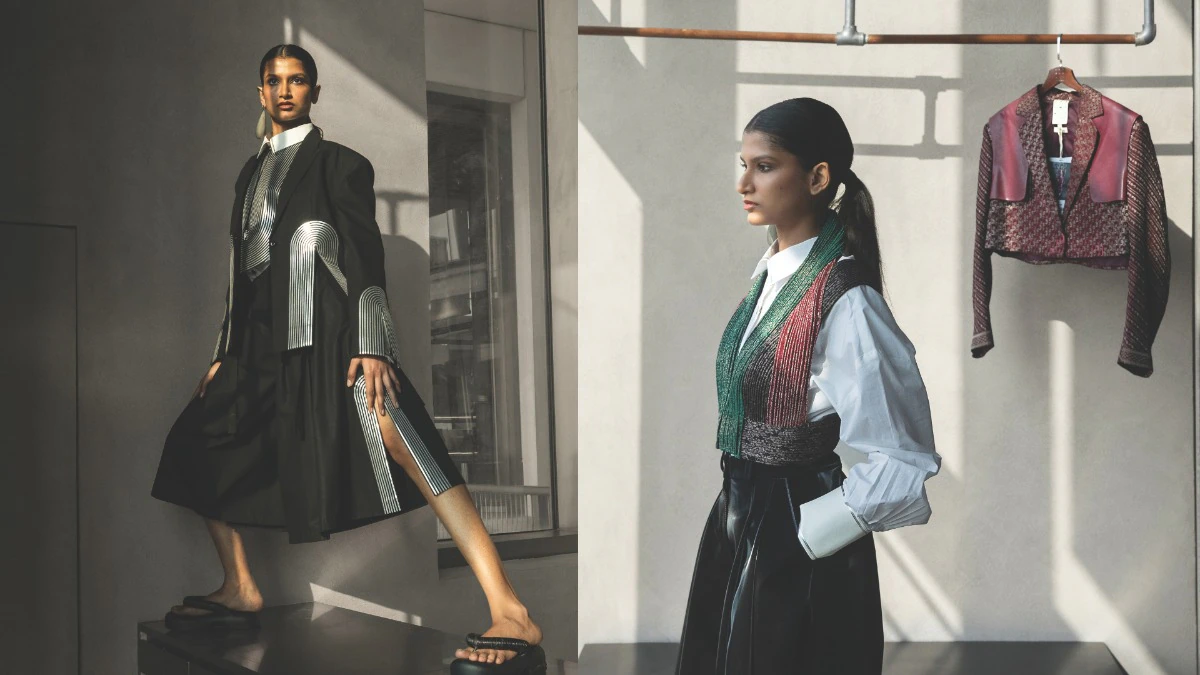
There’s something oddly fascinating about watching a machine create something that feels… human. Not perfect, not always practical—but expressive in its own strange way. Fashion, which has always been deeply tied to human creativity, emotion, and culture, is now slowly opening its doors to artificial intelligence.
And at first, it feels a little uncomfortable. Can a machine really “design” something meaningful? Or is it just remixing patterns faster than we ever could?
The answer, as it turns out, isn’t so black and white.
The First Encounter: When AI Meets Fabric
If you’ve ever browsed through AI-generated fashion concepts online, you’ve probably noticed something. The designs are bold. Sometimes weird. Occasionally brilliant.
AI doesn’t think in terms of “safe” or “trendy” the way humans do. It experiments endlessly—mixing textures, silhouettes, colors that a traditional designer might hesitate to combine.
And that’s where things get interesting.
Instead of replacing designers, AI is starting to act more like a collaborator. A tool that throws unexpected ideas into the room, forcing humans to react, refine, and reinterpret.
Why the Industry Is Paying Attention
Fashion has always been about speed—new seasons, new collections, constant reinvention. But the pace today is something else entirely.
Brands are under pressure to produce faster while still staying relevant. Consumers want novelty, personalization, and sustainability—all at once.
AI fits neatly into that chaos.
It can analyze trends, predict consumer preferences, generate design drafts in minutes, and even simulate how a garment might look on different body types. Tasks that once took weeks can now happen almost instantly.
So naturally, people are starting to ask: AI-generated fashion design ka future kya hai?
Because it’s not just a passing curiosity anymore—it’s becoming part of the workflow.
The Creative Tug-of-War
Here’s where the conversation gets a bit deeper.
Fashion isn’t just about clothes. It’s storytelling. Identity. Culture. Sometimes even rebellion. Can AI truly understand that?
Well… not exactly.
AI learns from existing data. It studies patterns, absorbs styles, and then creates something new based on that input. But it doesn’t feel. It doesn’t experience life the way a human designer does.
And yet, it can still surprise us.
Some designers are using AI to break out of creative blocks. Others use it to visualize ideas they couldn’t quite sketch themselves. It’s less about handing over control and more about expanding possibilities.
Still, there’s a tension. A quiet debate about originality, ownership, and the role of human intuition.
Personalization Is Changing the Game
One of the biggest shifts AI brings to fashion is personalization.
Imagine a future where your clothing is designed specifically for you—based on your body type, style preferences, even your local climate. AI can process all that data and generate designs that feel tailored, not mass-produced.
We’re already seeing early versions of this. Custom-fit clothing, AI-powered styling apps, virtual try-ons—it’s all part of the same ecosystem.
And when you think about it, it makes sense. People don’t just want fashion anymore—they want relevance.
Sustainability: A Quiet Advantage
There’s another side to this story that doesn’t get enough attention—sustainability.
The fashion industry has long struggled with overproduction and waste. Unsold inventory, fast fashion cycles, discarded materials—it adds up.
AI can help reduce that.
By predicting demand more accurately, brands can produce only what’s needed. By simulating designs digitally, they can avoid unnecessary physical samples. Even fabric usage can be optimized through AI-driven pattern design.
It’s not a perfect solution, but it’s a step in the right direction.
The Risk of Losing the “Human Touch”
Of course, not everything about this shift feels comfortable.
There’s a genuine concern that as AI becomes more involved, fashion might start to feel… less human. Less emotional. More algorithmic.
And that’s a valid fear.
Because the charm of fashion often lies in its imperfections—the unexpected stitch, the cultural nuance, the story behind a piece. These aren’t things you can easily code.
So while AI can assist, the human element still matters. Maybe more than ever.
Designers Aren’t Being Replaced—They’re Evolving
If there’s one thing worth emphasizing, it’s this: AI isn’t here to replace designers.
It’s changing what the role looks like.
Designers are becoming curators, decision-makers, storytellers who guide the technology rather than compete with it. They choose what works, what resonates, what feels right.
In a way, AI is handling the “how,” while humans focus on the “why.”
A Future That Feels… Collaborative
When people ask again—AI-generated fashion design ka future kya hai?—the answer doesn’t feel like a simple prediction anymore.
It feels like a collaboration in progress.
A blend of machine efficiency and human creativity. Of data-driven insights and emotional storytelling. Of speed and soul.
And maybe that’s the most interesting part.
Fashion has always evolved with technology—from sewing machines to digital design tools. AI is just the next chapter. Not the end of the story, but a new way of telling it.
Where This Leaves Us
If you love fashion, this moment might feel a bit uncertain. But it’s also full of possibility.
Because at the end of the day, clothes aren’t just about design—they’re about people. How we express ourselves, how we connect, how we feel.
And no matter how advanced AI becomes, that human connection? That’s something we’re not giving up anytime soon.