Water is one of those things we rarely think about until something seems off. Maybe the shower leaves your skin feeling dry. Perhaps the sink develops cloudy spots, the kettle collects a stubborn white crust, or your laundry just doesn’t feel as fresh as it used to. These little clues can point to a bigger issue: the condition of the water moving through your home.
Improving water at home isn’t always about buying the most advanced equipment available. It starts with understanding what’s actually in your water and what those substances are doing to your plumbing, appliances, and everyday routines. Once you know the problem, choosing the right solution becomes much easier.
Why Water Quality Matters More Than You Might Think
Good water quality affects much more than drinking water. It can influence cooking, bathing, cleaning, laundry, and even the lifespan of household appliances.
Municipal and well water can contain different levels of minerals and naturally occurring substances. Depending on the local water source, you might encounter calcium, magnesium, iron, sediment, chlorine, or other contaminants. Not every substance creates an obvious problem, either. Sometimes the first sign is simply a gradual change in how your home operates.
For example, mineral-rich water can leave deposits inside pipes and water heaters. Over time, those deposits may reduce efficiency and restrict water flow. Soap may also struggle to rinse away properly, leaving a film on shower doors or fixtures.
That’s why paying attention to changes in your water can save you headaches later.
Understanding Hard Water in Everyday Life
If you’ve ever cleaned a bathroom faucet only to see white spots return a few days later, you’ve probably encountered hard water.
Hard water contains higher concentrations of dissolved minerals, particularly calcium and magnesium. It isn’t necessarily unsafe to drink, but it can be surprisingly inconvenient around the house.
Think about your water heater. When mineral deposits accumulate on heating elements or inside the tank, the system may have to work harder to heat water. Similar buildup can occur in dishwashers, washing machines, coffee makers, showerheads, and plumbing fixtures.
There are everyday annoyances, too. Hard water can make soap and shampoo less effective, meaning you may use more product than you normally would. Clothes can feel rough after washing, and glassware may come out of the dishwasher with visible spots.
None of these problems usually happens overnight. That’s part of what makes hard water easy to overlook. The effects creep in slowly.
What Does a Water Softener Actually Do?
A water softener is designed primarily to address hardness caused by calcium and magnesium. Traditional ion-exchange systems work by exchanging these hardness minerals with sodium or potassium ions as water passes through a resin bed.
The result is softer water throughout the home.
This distinction is important because a softener isn’t a universal filtration system. It isn’t designed to remove every possible contaminant. If your concern involves bacteria, sediment, chlorine, lead, PFAS, or another specific substance, you may need a different treatment technology.
In other words, choosing equipment based on a vague idea of “better water” can lead to wasted money. Testing first is usually the smarter move.
When Water Softener Installation Makes Sense
For households dealing with persistent mineral buildup, water softener installation can be a practical long-term improvement.
A properly selected system can help reduce scale formation in plumbing and appliances while making everyday tasks more pleasant. Faucets may stay cleaner for longer, soap can lather more easily, and laundry may feel different after washing.
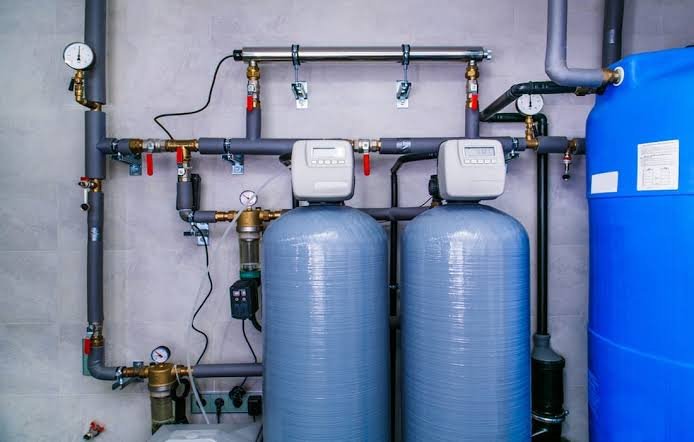
Still, installation isn’t simply a matter of connecting a tank to the nearest pipe. The system needs to be sized according to household water use and hardness levels. It also needs an appropriate location, drainage arrangement, electrical access when required, and correct plumbing connections.
A professional installer can also check whether the home’s existing plumbing is suitable and make sure the system is configured properly.
That’s worth considering because an incorrectly sized or poorly installed softener may not perform as expected. Bigger isn’t automatically better.
Start With a Water Test
Before investing in treatment equipment, find out what you’re dealing with.
A basic water test can provide information about hardness, pH, iron, manganese, chlorine, and other characteristics. Well-water users may need broader testing because private wells aren’t regulated in exactly the same way as public water supplies.
Testing gives you a starting point. Instead of guessing why your fixtures are developing scale or why your water tastes unusual, you have actual information to work from.
It can also prevent unnecessary treatment. If your water doesn’t have a particular problem, there’s little reason to install a system designed to solve it.
For more complicated concerns, professional testing can be especially useful. The goal isn’t to turn your home into a laboratory. It’s simply to make a sensible decision based on evidence.
Soft Water and Your Plumbing
Your plumbing system works quietly in the background every day, so it’s easy to forget how much water passes through it.
Mineral scale can accumulate inside pipes and components over time. It may restrict flow and contribute to problems with water heaters and fixtures. Reducing hardness can help limit that buildup, particularly in areas where mineral levels are naturally high.
There can also be a maintenance advantage. Showerheads, faucets, and other fixtures may require less frequent cleaning when mineral deposits are reduced.
Of course, a water softener won’t repair plumbing that’s already damaged. If pipes are severely restricted or an appliance has developed a mechanical problem, those issues still need attention. Water treatment is part of a home’s maintenance strategy, not a magic fix for everything.
Choosing the Right System for Your Home
Every household has different water conditions and habits. A small family with moderate hardness may have very different requirements from a large household using well water.
When comparing systems, consider:
- Your measured water hardness
- Household size and daily water consumption
- Whether you use municipal or well water
- Available installation space
- Regeneration and salt requirements
- Ongoing maintenance needs
- Warranty and service support
- Whether additional filtration is necessary
It’s also wise to think beyond the initial purchase price. A cheaper system that requires frequent maintenance or doesn’t adequately handle your home’s water demand may cost more over time.
The best solution is usually the one that fits the actual problem—not the one with the longest feature list.
A Small Change That Can Make a Noticeable Difference
Water treatment isn’t particularly glamorous. Nobody gathers around the dinner table to discuss the new filtration equipment in the basement. Yet the difference can show up in dozens of small ways: cleaner fixtures, softer-feeling laundry, fewer mineral spots, and appliances that aren’t battling unnecessary scale.
The important thing is to approach the process thoughtfully. Test your water, understand what the results mean, and choose treatment based on those findings.
If hardness is the issue, a properly selected softener can be a worthwhile investment. If there’s another concern, filtration or another treatment method may make more sense.
Ultimately, better water starts with knowing your water. Once you understand what’s coming through your pipes, improving it becomes far less complicated—and a lot more practical.