Water problems don’t always announce themselves in obvious ways. Sometimes, it’s a chalky film around the kitchen faucet. Other times, the laundry never seems quite as soft as it should, or a glass of drinking water has a taste that makes you reach for something else. In a business, the signs might be more expensive: equipment needs frequent cleaning, filters clog too quickly, or staff spend valuable time dealing with avoidable maintenance.
Whatever the situation, choosing a water treatment system can feel like a bigger task than expected. There are different technologies, unfamiliar technical terms, and plenty of products promising impressive results. It’s easy to get caught up comparing specifications before you’ve even established what your water needs.
That’s why a useful conversation with a knowledgeable water treatment professional can make such a difference. Instead of beginning with a product, the process begins with your property, your concerns, and what you want to achieve.
Start With the Water You Actually Use
Every household has its own routine. A family that cooks at home and fills reusable bottles throughout the day may prioritize drinking-water quality. Another household might be more concerned about mineral deposits on bathroom fixtures, stiff laundry, or scale accumulating inside a water heater.
The first step is to walk through your household’s needs and water quality concerns rather than assuming every home needs the same equipment. A professional assessment should consider the water source, the number of people using it, daily consumption, existing plumbing, and any changes you’ve noticed recently.
Hard water, for example, contains elevated levels of calcium and magnesium. It can leave deposits on faucets, interfere with soap lather, and contribute to scale buildup in appliances. Sediment may create cloudy water or collect in plumbing fixtures, while certain dissolved substances can affect taste and odor.
Appearance alone, however, doesn’t tell the complete story. Some contaminants cannot be detected reliably through taste, smell, or color. Testing is therefore important when selecting treatment, particularly for private wells or when there are specific safety concerns.
Once the water has been assessed, recommendations can focus on the actual problem instead of relying on guesswork.
Ask Questions Before Choosing Equipment
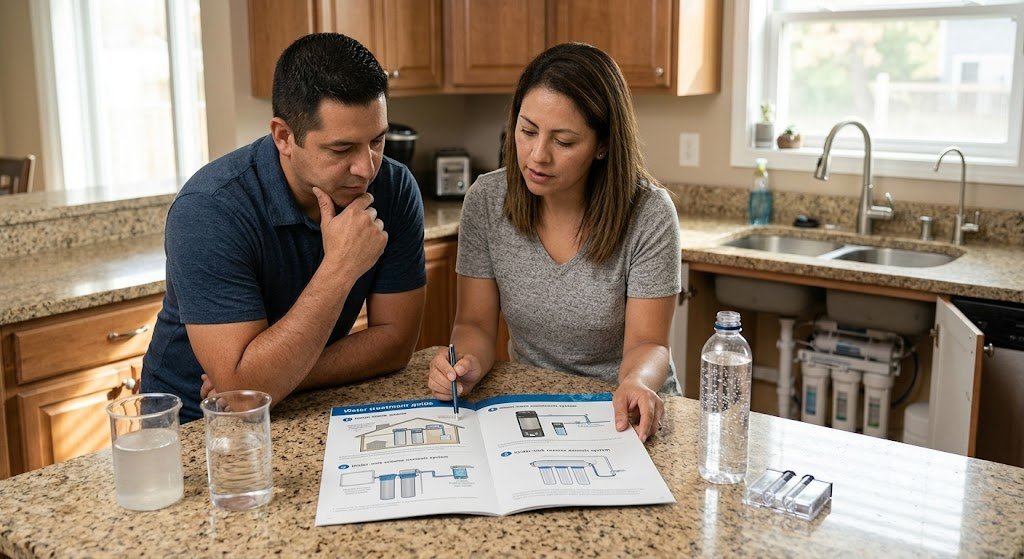
A water treatment consultation should feel like a conversation, not a sales presentation. You should have room to describe what’s bothering you, ask questions, and understand why a particular system might be suitable.
For instance, if hard water is the main concern, a conventional ion-exchange softener may be appropriate. If you’re primarily interested in improving drinking-water quality, a point-of-use filtration system or reverse osmosis unit might deserve consideration, depending on test results and the substances you want to reduce.
These technologies aren’t interchangeable. A softener addresses hardness, while reverse osmosis can reduce many dissolved substances when the system is properly selected. Activated carbon can improve certain tastes and odors, and sediment filters capture suspended particles. Each has a purpose, and each has limitations.
A good consultation should also cover the equipment’s capacity, installation requirements, maintenance schedule, and expected operating costs. If something isn’t clear, ask for an explanation. You don’t need to become a water treatment expert overnight, but you should feel comfortable with the decision you’re making.
Be Honest About Your Budget and Future Plans
Cost matters, and there’s no reason to feel awkward about discussing it. A treatment system is a long-term household purchase, so the initial price is only one part of the decision.
During the consultation, discuss your budget and long-term goals openly. You may want an affordable solution for a single drinking-water tap, or you might be planning to treat water throughout the house. Perhaps you’re renovating and would prefer to install suitable equipment now rather than revisit the plumbing later.
These details can help narrow the options. A large whole-house system may be unnecessary for a household whose only concern is drinking-water taste. Conversely, a small under-sink filter won’t address scale affecting showers, washing machines, and water heaters throughout the property.
Remember to consider ongoing expenses. Filters, membranes, replacement media, salt, servicing, and electricity can all contribute to the cost of ownership. Ask how often parts need replacing and whether they are readily available.
It’s also worth thinking about future changes. A growing family, a home extension, or increased water consumption may affect the capacity you need. Planning for realistic future demand is sensible; paying for far more capacity than you’ll use usually isn’t.
Understanding the Treatment Options Without the Jargon
Water treatment terminology can sound complicated, especially when several technologies are presented together. A helpful professional should explain different treatment options in plain language, including what each system does and what it won’t do.
Consider three common approaches.
A water softener reduces hardness minerals through an ion-exchange process. It can help control scale and make cleaning easier, but it isn’t designed to remove every contaminant or disinfect unsafe water.
A reverse osmosis system pushes water through a semipermeable membrane, reducing many dissolved substances. It’s often used for drinking and cooking, although performance varies by model and water conditions. These systems also produce wastewater and require periodic filter and membrane replacement.
Filtration covers a broader range of technologies. Sediment filters capture particles, activated carbon can reduce certain chemicals and odors, and specialized media may address specific water-quality concerns. The correct choice depends on the substances present and the filter’s verified performance.
Independent certifications and detailed product specifications are useful when comparing equipment. Check whether a product is certified to reduce the particular contaminant you’re concerned about rather than assuming a general filtration claim covers everything.
Clear explanations make it easier to compare solutions fairly and understand why one option may be more suitable than another.
Installation Should Be Part of the Discussion
Even the right equipment can disappoint if it’s installed incorrectly or doesn’t suit the property’s plumbing. Before approving a purchase, ask where the unit will be placed, whether drainage or electrical connections are needed, and how the installation could affect access to existing pipes or storage areas.
Some systems fit beneath a kitchen sink, while others need a dedicated space near the main water supply. Whole-house equipment may require more planning, especially in older properties or buildings with limited utility space.
Ask who will carry out the installation and whether the work includes testing the system afterward. You should also receive instructions covering normal operation, maintenance, and any warning signs that indicate a problem.
A little preparation can prevent inconvenient surprises on installation day.
Why Follow-Up and Maintenance Matter
Water treatment isn’t a one-time task that can be forgotten once the equipment is running. Filters become clogged, membranes wear out, and treatment media may lose effectiveness. Without appropriate maintenance, performance can decline gradually.
Keep a record of replacement dates, service visits, and relevant water test results. Follow the manufacturer’s maintenance instructions and arrange further testing when the water source changes or an unexpected problem appears.
If you notice a new odor, discoloration, unusual taste, or sudden drop in water pressure, investigate the cause. Don’t assume the treatment system will automatically correct every change.
A reliable provider should explain what routine care involves and make it clear which tasks you can handle yourself and which require professional assistance.
A Better Decision Begins With Better Information
Choosing a water treatment system doesn’t have to involve guesswork or pressure to purchase the most expensive equipment available. Start by describing the problem, testing the water where appropriate, and understanding which treatment methods can address the findings.
A thoughtful consultation brings the important pieces together: household needs, budget, installation requirements, maintenance, and future plans. It also gives you the opportunity to ask questions before committing to a system.
Ultimately, the best solution isn’t necessarily the newest or most complicated one. It’s the system that suits your water quality, supports your everyday routine, and remains manageable over time.
When the conversation starts with listening and clear information, the decision becomes much easier. And that’s a reassuring place to begin: knowing that the equipment you choose has a purpose, the costs are understood, and your water treatment plan is built around the needs of your home rather than someone else’s.