Most homeowners don’t think much about their water treatment equipment when everything is working properly. The water comes out, the softener does its job, the filter keeps running, and life carries on.
Then something changes.
Maybe the water suddenly tastes different. Perhaps scale starts appearing again on faucets, the pressure drops, or a filtration unit begins making an unfamiliar noise. Sometimes the problem is obvious. Other times, the equipment seems to be working while the water quality quietly gets worse.
That’s when knowing where to turn becomes important. Water treatment repair services can help identify what’s gone wrong, but good repair isn’t simply about replacing a part and walking away. It’s about finding the underlying cause and making sure the system is actually doing what it was designed to do.
Small Warning Signs Shouldn’t Be Ignored
Water treatment equipment rarely fails without giving you some kind of clue.
A change in taste or odor can be an early warning. So can unusual noises, leaking connections, reduced water pressure, frequent regeneration, or water that suddenly becomes harder than usual.
You might also notice familiar problems returning. White scale may reappear around faucets. Laundry might develop stains. Drinking water could begin tasting strongly of chlorine.
It’s tempting to ignore these signs because the system is still technically running. But “running” and “working properly” aren’t always the same thing.
A small problem today can become a more expensive repair later if it’s left unattended.
Understanding What Your Equipment Is Supposed to Do
Before diagnosing a problem, it’s useful to understand what your treatment equipment actually handles.
A softener primarily addresses hardness minerals such as calcium and magnesium. Carbon filtration may improve taste and odor while reducing certain compounds. Reverse osmosis systems can reduce many dissolved substances. Specialized filtration equipment can target specific contaminants.
This matters because not every water problem is a mechanical problem.
For example, if your water suddenly develops an iron taste, replacing a filter may not solve anything if the source water has changed. Likewise, if a softener appears to be working but hardness has returned, the issue could involve settings, resin condition, salt supply, or another part of the system.
Good troubleshooting looks at both the equipment and the water.
Why Professional Service Can Be Worth It
There’s a certain satisfaction in fixing things yourself. Changing a cartridge or checking a salt level is often straightforward.
But treatment equipment can become complicated when electrical controls, valves, pressure, pumps, media tanks, and plumbing connections are involved.
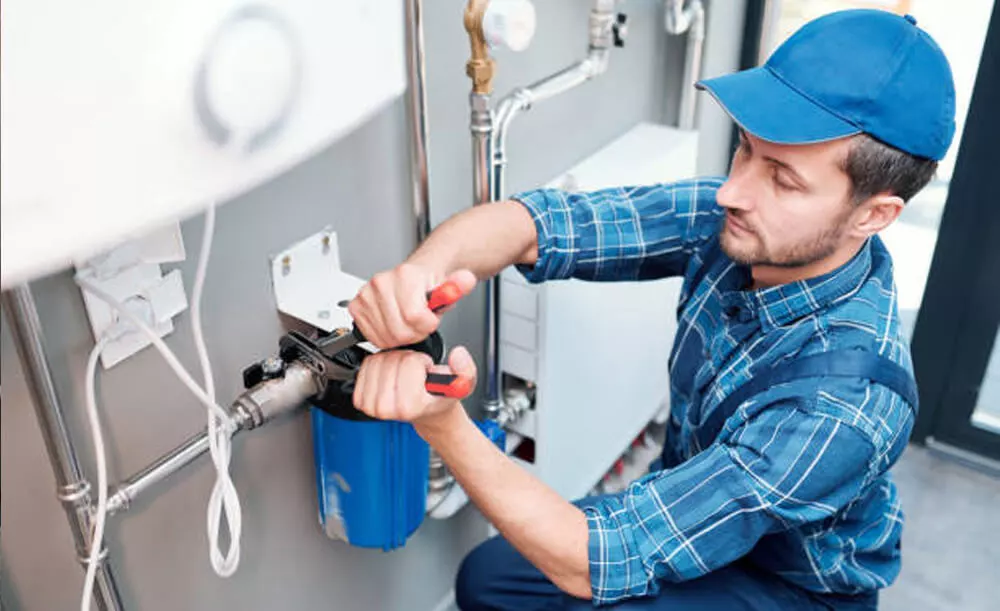
That’s where service and repair from a qualified technician can save time and frustration.
A professional can inspect the system, identify worn components, check settings, and determine whether the equipment is appropriately sized for the household.
More importantly, they can sometimes spot problems that aren’t immediately visible.
The goal isn’t to call a technician for every tiny issue. It’s knowing when a problem has moved beyond routine homeowner maintenance.
Common Problems Water Treatment Systems Develop
Even well-maintained equipment eventually needs attention.
Some common issues include:
- Clogged or exhausted filters
- Leaking fittings or connections
- Faulty control valves
- Incorrect system settings
- Low salt levels in softeners
- Worn seals or O-rings
- Reduced water pressure
- Damaged electrical components
- Exhausted filtration media
- Problems with pumps or drainage
Different equipment has different failure points.
A water softener may stop regenerating properly, while a reverse osmosis system might develop a slow leak or produce water more slowly than usual.
Don’t assume the most obvious component is the cause. The part that’s showing the symptom isn’t necessarily the part that’s failing.
Repair or Replace? That’s the Real Question
Sometimes repair makes perfect sense. Other times, replacement is the smarter financial decision.
Age is one factor, but it isn’t the only one.
Consider the equipment’s condition, repair cost, availability of replacement parts, efficiency, and expected remaining lifespan.
If a relatively new system needs a replacement valve, repairing it may be sensible. If an older system requires several expensive components at once, putting more money into it may not be worthwhile.
Ask for a clear explanation of the repair and what caused the failure.
A good technician should be able to explain whether the repair is likely to provide a reasonable amount of additional service life.
Maintenance Can Prevent Unnecessary Repairs
The easiest repair is often the one you never need.
Routine maintenance can extend the useful life of water treatment systems and help catch developing issues before they become major failures.
Filters should be changed according to the manufacturer’s recommendations. Softener salt levels should be monitored. Tanks, connections, and controls should be inspected periodically.
If your system has a service schedule, keep it.
It sounds boring, admittedly, but maintenance is one of those things you appreciate most when something doesn’t go wrong.
Don’t Forget the Water Itself
Sometimes homeowners focus entirely on the machine when the real issue is changing source water.
Private wells can experience changes in chemistry over time. Seasonal conditions, groundwater movement, or changes around the property can affect what enters the water supply.
Even municipal water can have changes in taste or characteristics.
If a properly maintained system suddenly stops delivering the expected results, consider testing the water again. The treatment equipment may be functioning normally while the water entering it has changed.
This is particularly important when a problem returns after a repair.
Choose a Repair Provider Carefully
Not every service call is the same.
Before hiring someone, ask whether they’re familiar with your specific equipment. Find out what the diagnostic fee covers and whether labor and replacement parts are charged separately.
It’s also useful to ask whether the technician will test system performance after completing the repair.
A repair isn’t truly successful if the technician simply stops the leak and leaves without checking whether the equipment is treating water correctly.
Clear communication matters too. You should understand what failed, what was repaired, and whether anything else needs attention.
Keep Records of Your Equipment
A surprisingly helpful habit is keeping basic records.
Write down the model, installation date, filter changes, major repairs, and replacement parts. Keep manuals and warranty information somewhere accessible.
These details can make future service much easier.
If a technician knows the system’s age and repair history before arriving, diagnosis may be faster. It can also help you decide when continued repairs no longer make financial sense.
A Healthy Water System Is an Ongoing Investment
Water treatment equipment isn’t completely maintenance-free, and expecting it to be can lead to unnecessary frustration.
The better approach is simple: pay attention to changes, handle routine maintenance, and call for professional help when the problem goes beyond basic upkeep.
Don’t wait until the water quality has become unbearable or a small leak has turned into a major plumbing issue.
A properly maintained treatment system should quietly do its job in the background. That’s really what you want.
When repairs are needed, focus on the cause rather than just the symptom. When replacement becomes necessary, compare the long-term value instead of choosing purely on price.
In the end, reliable water treatment isn’t about having the fanciest equipment in the house. It’s about having a system that fits your water, receives the care it needs, and keeps doing its job year after year.