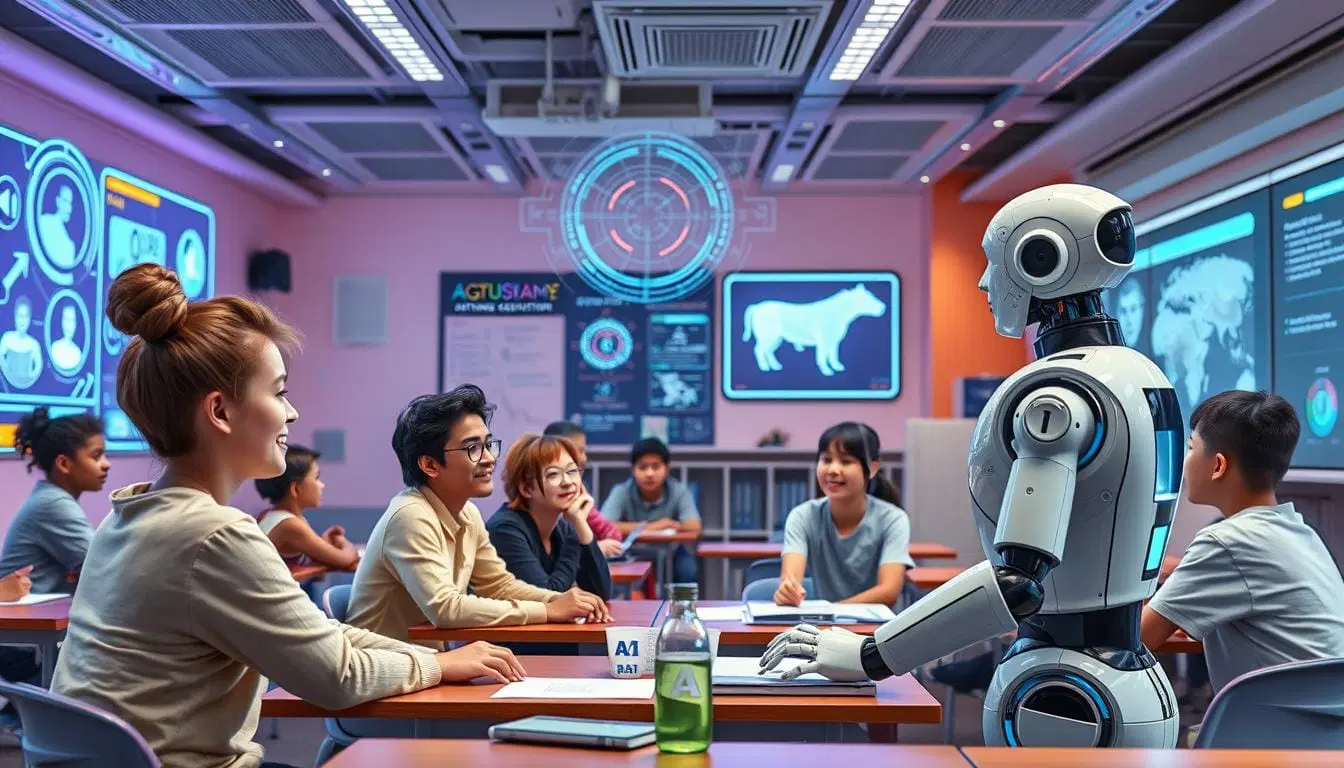
A few years ago, the idea of a “smart classroom” in a rural school felt… distant. Almost like something reserved for big-city institutions with polished floors and air-conditioned halls. But things have been shifting quietly. Now, in many villages across India, you’ll find a projector mounted on a wall, a teacher navigating slides, and students watching animated lessons with wide-eyed curiosity.
It sounds like progress—and in many ways, it is. But like most things in education, the reality is layered. Not entirely magical, not entirely flawed. Somewhere in between.
The First Impact: Attention
Let’s start with something simple—attention span.
Traditional classrooms in rural areas often rely heavily on chalk-and-talk methods. Nothing wrong with that, but it can get repetitive. When digital tools enter the picture—videos, visuals, even simple animations—it changes how students engage.
Concepts that once felt abstract suddenly become visible. A science lesson isn’t just words anymore; it’s movement, color, context.
Teachers often say the same thing: students who barely focused earlier now sit up, watch, and sometimes even ask questions. That shift alone feels significant.
Accessibility of Quality Content
One of the biggest advantages of digital classrooms is access. Not every rural school has highly trained subject experts for every topic. That’s just the reality.
But with digital platforms, students can learn from standardized, well-designed content. Lessons created by experienced educators reach classrooms that might otherwise struggle with resources.
In that sense, digital classrooms act like a bridge—connecting gaps that have existed for years.
Still, it’s worth noting: access doesn’t always mean understanding. That depends on how the content is used.
The Role of Teachers Is Changing (Not Disappearing)
There’s a common fear that technology might replace teachers. But honestly, that hasn’t really happened.
If anything, the role of teachers is evolving.
Instead of being the sole source of information, they become facilitators. They guide discussions, explain difficult parts, and connect digital lessons to real-life examples students understand.
In rural settings especially, this human connection matters a lot. A video can explain a concept, but a teacher understands the student’s context—their language, their background, their struggles.
That blend of tech and human touch is where real learning happens.
The Infrastructure Reality
Now, here’s where things get a bit uneven.
Not every school has stable electricity. Internet connectivity can be patchy. Devices break, and maintenance isn’t always quick. Sometimes, a digital classroom exists… but isn’t used regularly because of these challenges.
And then there’s training. Not all teachers are comfortable with technology right away. Some adapt quickly, others take time.
So while the idea of digital classrooms is promising, its effectiveness often depends on consistent infrastructure and support systems—things that are still evolving in many regions.
Beyond Academics: Confidence and Exposure
Interestingly, the impact isn’t limited to textbooks.
Students exposed to digital tools often develop a different kind of confidence. They become more curious about the world beyond their village. They start recognizing places, concepts, even career paths they hadn’t heard of before.
It’s subtle, but powerful.
A student watching a video about space exploration or coding might not fully grasp it immediately, but it plants a seed. And sometimes, that’s enough to change direction later in life.
The Real Question We Should Be Asking
At some point, it’s important to step back and ask: Rural India me digital classrooms ka real impact kya hai?
The answer isn’t a simple “good” or “bad.”
Digital classrooms are improving engagement, providing better content, and opening doors to new ideas. That’s undeniable. But they’re not a complete solution.
Without proper infrastructure, teacher training, and local adaptation, their impact can remain limited or inconsistent.
In other words, technology alone doesn’t transform education. It needs a system around it.
A Shift That’s Still Unfolding
What we’re seeing right now is not the final version—it’s a transition phase.
Some schools are using digital tools effectively, blending them seamlessly with traditional teaching. Others are still figuring it out, experimenting, adjusting.
And that’s okay.
Education, especially in a diverse country like India, doesn’t change overnight. It moves slowly, sometimes unevenly, but it moves.
Final Thoughts
There’s something quietly hopeful about a rural classroom lighting up with a digital lesson. Not because it’s flashy, but because it signals possibility.
Digital classrooms aren’t a miracle fix. They won’t solve every educational challenge. But they are a step—a meaningful one—towards making learning more accessible, engaging, and connected.
Maybe the real impact isn’t just in better test scores or improved attendance. Maybe it’s in the way a student starts seeing the world a little differently.
And sometimes, that’s where the biggest change begins.