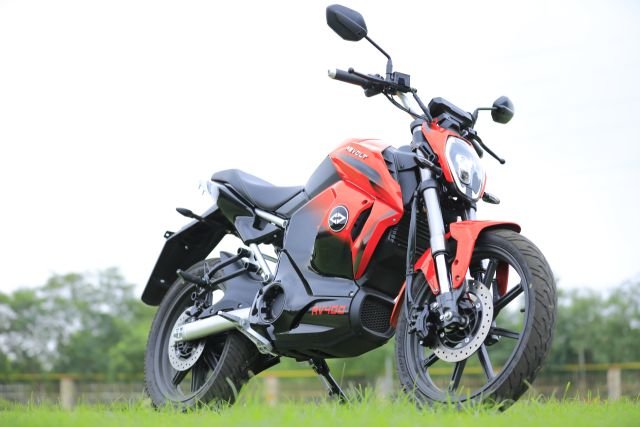
There’s something interesting happening on Indian roads right now — not loud, not flashy, but quietly significant. While everyone seems obsessed with electric vehicles, another alternative is slowly gaining ground. It doesn’t need charging stations, doesn’t depend heavily on rare minerals, and fits surprisingly well into India’s existing ecosystem. We’re talking about biofuel-powered bikes — and honestly, their story feels more grounded than most futuristic mobility dreams.
A Familiar System, With a New Twist
One of the biggest advantages of biofuel bikes is how little they disrupt the current system. Unlike EVs, which demand new infrastructure, biofuels can often work with modified versions of existing engines. That’s a big deal in a country where millions rely on petrol-powered two-wheelers daily.
Biofuels like ethanol blends are already being introduced in fuel stations across India. If you’ve filled petrol recently, chances are you’ve already used a blend without even realizing it. The government has been pushing for E20 fuel (20% ethanol blend), and that’s just the beginning.
It’s not revolutionary in appearance, but it’s quietly transformative in practice.
Why Biofuels Make Sense for India
India is an agricultural country at its core. That means raw materials for biofuels — like sugarcane, corn, and agricultural waste — are abundantly available. Instead of importing crude oil, there’s an opportunity to produce fuel domestically.
This shift isn’t just about energy; it’s about economics too. Farmers could benefit from additional income streams, and the country could reduce its dependency on foreign oil.
At a time when fuel prices fluctuate unpredictably, that kind of stability sounds… comforting, doesn’t it?
The Environmental Angle (Without the Hype)
Let’s be real — no fuel is completely “clean.” But biofuels tend to produce fewer greenhouse gas emissions compared to traditional petrol. They’re also biodegradable, which reduces the environmental impact in case of spills.
However, it’s not a perfect solution. Large-scale biofuel production needs careful management to avoid issues like land overuse or food supply disruptions. It’s a balancing act, and India is still figuring out how to get it right.
Still, compared to conventional fuels, it’s a step in a better direction.
Challenges That Can’t Be Ignored
Of course, it’s not all smooth riding.
For starters, not all existing bikes are fully compatible with higher ethanol blends. Engine modifications or newer models might be required, which adds cost. Then there’s the question of fuel efficiency — biofuels sometimes deliver slightly lower mileage.
And awareness? That’s still pretty low. Most people don’t actively think about what kind of fuel they’re using, as long as it gets them from point A to point B.
That mindset will need to change if biofuel bikes are to gain real traction.
Industry Moves and Early Signals
Some major automobile companies in India have already started experimenting with flex-fuel engines. These engines can run on different ethanol blends, offering flexibility without forcing users into a single option.
Even startups are exploring innovative ways to integrate biofuels into two-wheelers. It’s not mainstream yet, but the intent is clearly there.
What’s interesting is that this shift doesn’t feel forced. It’s gradual, almost organic — like the market is testing the waters before diving in.
What Riders Actually Care About
At the end of the day, most riders aren’t thinking about emissions or energy policies. They care about cost, convenience, and reliability.
If biofuel-powered bikes can offer comparable mileage, stable fuel prices, and easy availability, adoption could happen faster than expected. People don’t resist change when it makes their lives easier — they resist inconvenience.
And that’s where biofuels might quietly win.
So, Where Is This Headed?
The question — India me biofuel-powered bikes ka future kya hai? — doesn’t have a simple yes-or-no answer. It’s not about replacing petrol overnight or competing directly with electric vehicles. It’s more nuanced than that.
Biofuel bikes could become a strong middle-ground solution, especially in regions where EV infrastructure is still lacking. They might not dominate headlines, but they could dominate practicality.
In a country as diverse as India, there’s rarely a one-size-fits-all solution. And maybe that’s the point.
A Future That Feels… Balanced
If you step back and look at the bigger picture, biofuel-powered bikes don’t try to reinvent everything. They work with what already exists, improving it gradually.
That approach might not be exciting, but it’s realistic.
And sometimes, realism is exactly what a complex country like India needs.
Maybe a few years from now, when people talk about sustainable mobility, biofuel bikes won’t feel like an alternative anymore — just another normal choice.